 EN
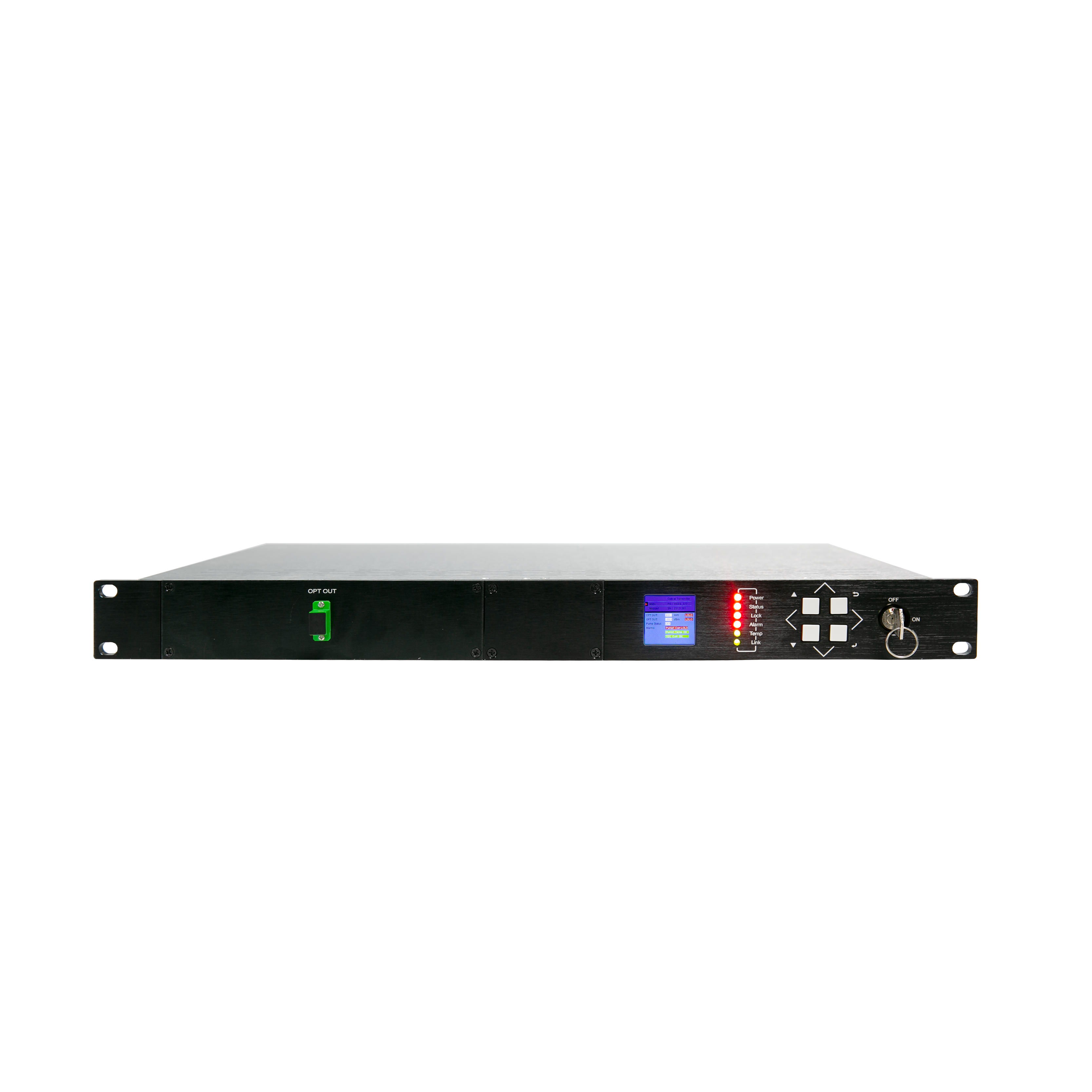
Choosing the proper CATV EDFA for a hybrid fiber-coaxial (HFC) or RF-over-glass (RFoG) network is not an easy decision of just selecting the maximum power number from a datasheet. The most important parameters to the performance and long-term stability of the links are output power and port configuration and noise figure. The specifications are essential and proper setup of these parameters – and what they mean and how they impact each other – is key to a successful CATV optical amplifier deployment or one that results in poor carrier-to-noise ratio (CNR) or wasted capital.
Output Power: Match the Budget, Not the Maximum
CATV EDFA output power is typically in dBm and can typically be obtained with the total output power of +13 dBm for short distribution links and +23 dBm (or more) for long-haul supertrunking and high-split architecture. Total output power vs per port power is the key difference. Assuming ideal loss in the splitter, a 4-port EDFA amplifier with a total output of +23 dBm will give an output of about +17 dBm per channel, but in practice, the loss due to the splitter and connectors will reduce that.
This additional electricity generation is not needed, and will cost money and electricity. The amplifier required by a small rural node is +13 to +17 dBm, and a headend launch into a long trunk will need +20 dBm or higher. The fiber attenuation at 1550nm (~ 0.25dB/km), splitter losses, connector losses and receiver sensitivity at the far end are all considerations that need to be taken into account and are accounted for by optical link budget. All CATV EDFAs are manufactured by Shandong Wanshuo Optoelectronic Equipment Co., Ltd. and the production lines have the requirements of output stability, port-to-port uniformity and so on.
Ports: Count the Splits, Not Just the Fibers
The number of the distribution fibres that can be directly fed into the input of the EDFA is determined by the port count. Typical configurations are 1, 2, 4, 8, 16 or even 32 ports. The greater the number of ports, the more flexibility there will be in the fan-out, but the greater the power fluctuation from port to port and splitter loss. For most CATV applications, ±0.5 dB port uniformity can be used as given on the datasheet; the tighter tolerance is only important when multiple receivers must be matched to one another.
A high-port-count EDFA can be beneficial for operators trying to consolidate headend equipment by reducing the number of pump lasers in the network and saving rack space by replacing several lower port count EDFAs. The compromise is that when one amp goes down, more customers are impacted. This should be taken into consideration in redundancy planning. In addition, Shandong Wanshuo's assembly and device production lines also employ intelligent testing systems, and the entire data can be traced from the port, which can be used for testing and verifying the port level before taking the goods.
Noise Figure: The Quiet Specification That Governs CNR
The noise figure (NF) is probably the most misinterpreted CATV EDFA parameter. Analog CATV transmission results in degradation in CNR at each amplification stage and the noise floor of each amplifier depends on its NF. The typical noise figure of a CATV EDFA is 4.5 dB – 6.0 dB; the smaller the value the better for weaker input signals.
The input power is important, as NF depends upon it. The power of CATV transmitters is typically measured at a specified input power (usually 0 dBm or higher) and is relatively high when compared to digital telecom signals. Noise figure drops off very quickly with lower input power. When selecting a CATV optical amplifier, make sure that the given NF is applicable to the input power level representative of your transmitter launch point for the site, not to a seemingly convenient test point. A 5.5 dB NF at +3 dBm input may be more relevant than a 4.5 dB NF at −10 dBm.
Bringing the Three Together
The last selection in the practical is done to the receiver. Determine the minimum required optical power for the CATV receiver for the desired CNR and then account for fiber and splitter losses to get to the desired per-port output. The total output power is the product of the output power per port times the number of ports (including splitter loss). Then check the noise figure at the specified input power level to ensure that it satisfies the CNR margin, especially when using multiple EDFAs in the link.
For Shandong Wanshuo Optoelectronic Equipment Co., Ltd., the setting of the three parameters is not the only way to manufacture CATV EDFAs, it's a design process. Standardized cleanroom manufacturing process, automated SMT and assembly lines and in-house device-testing guarantee CATV optical amplifiers that are not manufactured for datasheet optimism, but for stable, verifiable performance. To the network planner, the ideal CATV EDFA is the one that has just the right output power, just the right number of ports, just the right noise figure, just as many as the optical budget requires, and matches the optical budget.