 EN
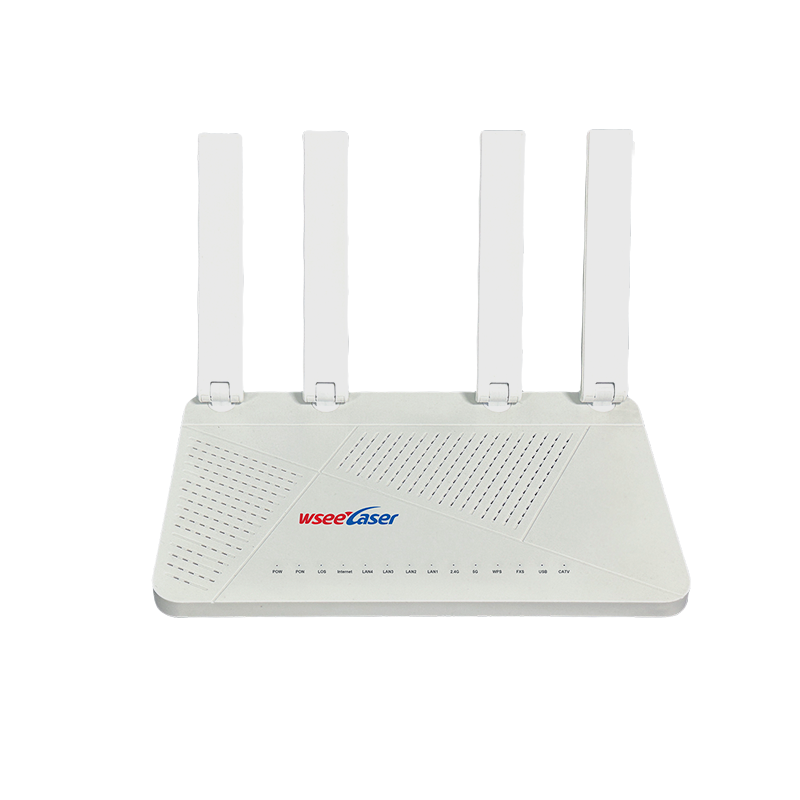
With fiber optics communications technology changing so rapidly, there can be a lot of jargon. The most commonly confused terms are ONU and ONT. These devices are the key to connecting a Passive Optical Network (PON) to the end-user. Understanding their differences is vital to network design and deployment.
Shandong Wanshuo Optoelectronic Equipment Co., Ltd is a professional manufacturer in optical communication industry, providing one-stop solution for full-link, such as GPON ONU, GPON OLT products. This article explains the difference between optical network unit and optical network terminal, guiding to a well-informed choice for the fiber network infrastructure.
Defining the Optical Network Unit (ONU)
IEEE standards define an Optical Network Unit (ONU) as the device between an OLT (Optical Line Terminal) and the end-user's equipment. The ONU will receive signals from the OLT and convert it to electrical signals to be sent to users through Ethernet or WiFi.
The optical network unit is frequently used in multi tenant or multi user systems in network architecture. The typical locations for ONUs are outdoor, utility rooms or building basements or corridors. ONUs typically have several ports, such as 4-port or 8-port, to provide connectivity for multiple users or the entire building, particularly when multiple apartments or offices share the same ONU.
Defining the Optical Network Terminal (ONT)
Optical Network Terminal (ONT): The ONT is described in ITU-T standards, and are specifically designed for end-user deployment. From a practical point of view, the ONT is the actual piece of equipment that is installed within the subscriber's home or office, and serves as the last leg of the fiber network.
The optical network terminal (ONT) functions as an interface device that translates the optical signals into electrical data that routers, computers and IPTV set-top boxes can handle. Today, the ONT can provide features such as Wi-Fi, VoIP telephone and CATV interfaces as part of the same unit, often known as a Home Gateway Unit (HGI). This makes the ONT the core of the triple-play services, such as high-speed Internet, voice and video in the household.
The Key Differences: Location and Function
Although ONU and ONT are often used interchangeably in the industry, the major difference is in where they are deployed and what they do.
Deployment Environment:
ONT: Always installed at user’s premises (FTTH). It is provided for one subscriber.
ONU: Can be installed in the user's home or frequently in the public space or outdoors for Fiber-to-the-Building (FTTB) or Fiber-to-the-Curb (FTTC). May be shared by several subscribers.
Service Scope
ONT: Frequently incorporates built-in routing, Wi-Fi and voice ports for a “one-box” solution at home.
ONU: In FTTB scenarios, ONUs are commonly used as media converter in MDU(Multi-Dwelling Unit) environments, distributing data to multiple end users via Ethernet cables.
ONU and ONT in GPON Networks
In a conventional GPON, the OLT (service provider's central office) is connected to numerous ONUs/ONTs on the user side. The GPON ONU/ONT receives the optical signal, transforms it to electrical and then sends it to end devices. It is important to understand the difference when considering a specific deployment scenario, whether that's a residential Wi-Fi6 ONU or a high-performance OLT.
Combined with the advanced automated production line and rigorous quality control, we offer our customers reliable optical network unit and OLT equipment at Shandong Wanshuo Optoelectronic Equipment Co., Ltd. Our solutions can be optimized for high precision and stable performance for both your compact 1GE ONU for your home network and your multi-port ONU for enterprise applications.
Conclusion
In summary the ONT vs ONU debate may often be semantic but it is important to note that the difference is in context, a ONU is a ONT that is specifically deployed in the end-user's home. For most FTTH deployments, the terms are interchangeable. For FTTB or business use cases, however, an optical network unit generally refers to a unit that supports more than one endpoint. The differences in these technologies help network engineers to design PON systems for required bandwidth and coverage.