 EN
EN
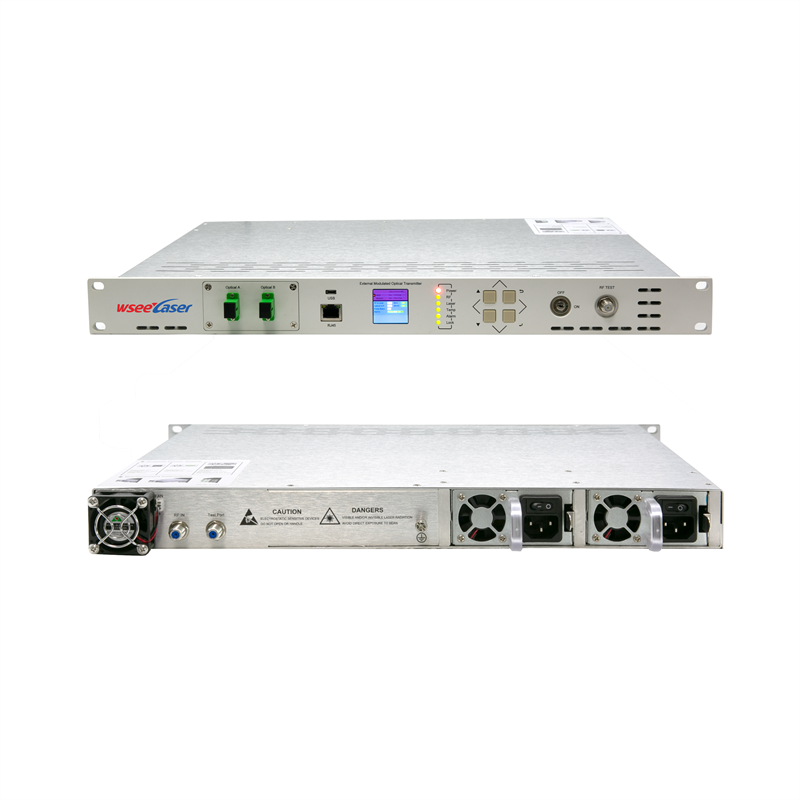
When planning out a long haul fiber network, there are several important things to consider: signal integrity, power budgets, and infrastructure cost. Signals sent through the fiber will always be somewhat attenuated, as well as dispersed, the farther they travel through the fiber. The fiber optic amplifier plays a crucial role in addressing these challenges. This document explores the key design considerations when determining the appropriate amplification for long haul, metro, and access networks so that the highest performance, reliable, and lowest TCO can be achieved.
Understanding the Role of a Fiber Optic Amplifier in Network Architecture
A fiber optic amplifier will directly boost optical signals directly in the optical domain, without conversion to electrical energy and back. The all-optical method provides the ability to transparent transport signals over multiple wavelengths, so it is essential in WDM systems. Once a fiber network passes 40 kilometers it is always essential to have the proper amplification in place as it dictates the distance, capacity, and feasibility of the network.
When selecting an optical signal amplifier, three parameters are taken into consideration by the network engineer: the amplification level of the optical signal itself, noise figure of the optic, and also the appropriate wavelengths of the amplifier. For most long haul networks operating within the 1550nm window (low loss window for standard single-mode fiber) the EDFA has become the most common solution. In longer distance networks past 80 kilometers and ratios over 1:64, alternatives may arise in the form of high power optic.
EDFA vs. EYDFA: Choosing the Right Power Class
The EDFA is typically the most common optic used as it has an output of up to 23 dBm per port and as low as a 4.0 dB noise figure. Regional network feeder distances of 15-25 kilometers with smaller split ratios (1:32-1:64) are well suited for the EDFA optic, due to a reasonable cost and performance with the capability of high output of 23 dBm. The technology is mature, and manufactured using rigorous standards, such as the 12 high grade dust free workshops and fully automated SMT lines at Shandong Wanshuo Optoelectronic Equipment Co., Ltd., making the EDFA a reliable optic for years to come.
In rural applications, RFoG, or where consolidating multiple end locations down to one headend is efficient, and larger split ratios (1:128) are being pushed or feeder distances of 30-50 kilometers, the EYDFA is ideal. The EYDFA offers power outputs as high as 33 dBm and at the price of slightly higher noise figure (4.5-5.5dB) and power consumption, but offers the longest reach and reduces the number of active components needed.
Critical Specifications for Long-Distance Performance
When discussing the fiber optic amplifier to use in long haul applications, gain flatness becomes extremely important on WDM networks with the multiple signals being transmitted, so a network that offers within ±0.5dB on the C-band will be ideal for all signals to be amplified at similar levels. Optical signal-to-noise ratios become key here, as degrading OSNR values limit whether FEC thresholds should be utilized and to what extent for the full system margin.
Amplifier location is also critical in long haul networks. A general standard is to utilize an optic every 80-100 kilometers in a long haul network where care must be taken not to exceed the network OSNR budget and utilize the proper amplification techniques. In access networks on the other hand, it makes sense to locate all optics at the headend with higher split ratios. A network which also offers hot-swappable power supplies, or with SNMP capability on its own power supplies, is also ideal for serviceability.
Hardware Quality and Manufacturing Excellence
The ultimate reliability of fiber amplifier is tied directly to the quality and manufacturing process. Precision work in cleanroom environment is necessary to provide optimal optic performance and minimize the chance of field failure which will lead to costly downtime. Shandong Wanshuo Optoelectronic Equipment Co., Ltd. has a fully vertically integrated production line where they can handle the SMT, wave soldering, to the devices themselves. The ability of Shandong Wanshuo Optoelectronic Equipment Co., Ltd. to maintain a 99.8% direct connection rate and maintain stability over 724 hours shows the level of quality necessary in today’s market.
Making the Final Decision
For the last step in determining how your fiber optic amplifier will be built, determine your optical power budget, factoring in all loss from splices, connectors, and splitters, and if your total is below 25dB, it would be worth considering a standard EDFA. Beyond that, an EYDFA may be required for higher split ratios and longer distances—reducing the number of active components needed, albeit at a higher unit cost. With a good optic solution from a company with expertise in manufacturing the highest quality of optics, you can have confidence in your fiber network.