 EN
FTTH (Fiber-to-the-Home) technology represents now the ultimate choice for broadband services providing services of Internet, voice and video in real-time with high speed to the end users. Network operators, system integrators and equipment manufacturers must know the FTTH network architecture network in order to develop scalable and economic access networks.
The Core Components of FTTH Network Architecture
The Optical Line Terminal (OLT), Optical Distribution Network (ODN) and Optical Network Unit (ONU) are the three basic components of typical FTTH network based on Passive Optical Network (PON) technology. PON's efficiency is based on its "passive" nature, that is, the ODN does not have any active electronics; it uses passive optical splitters to distribute signal.
OLT: The Network Brain
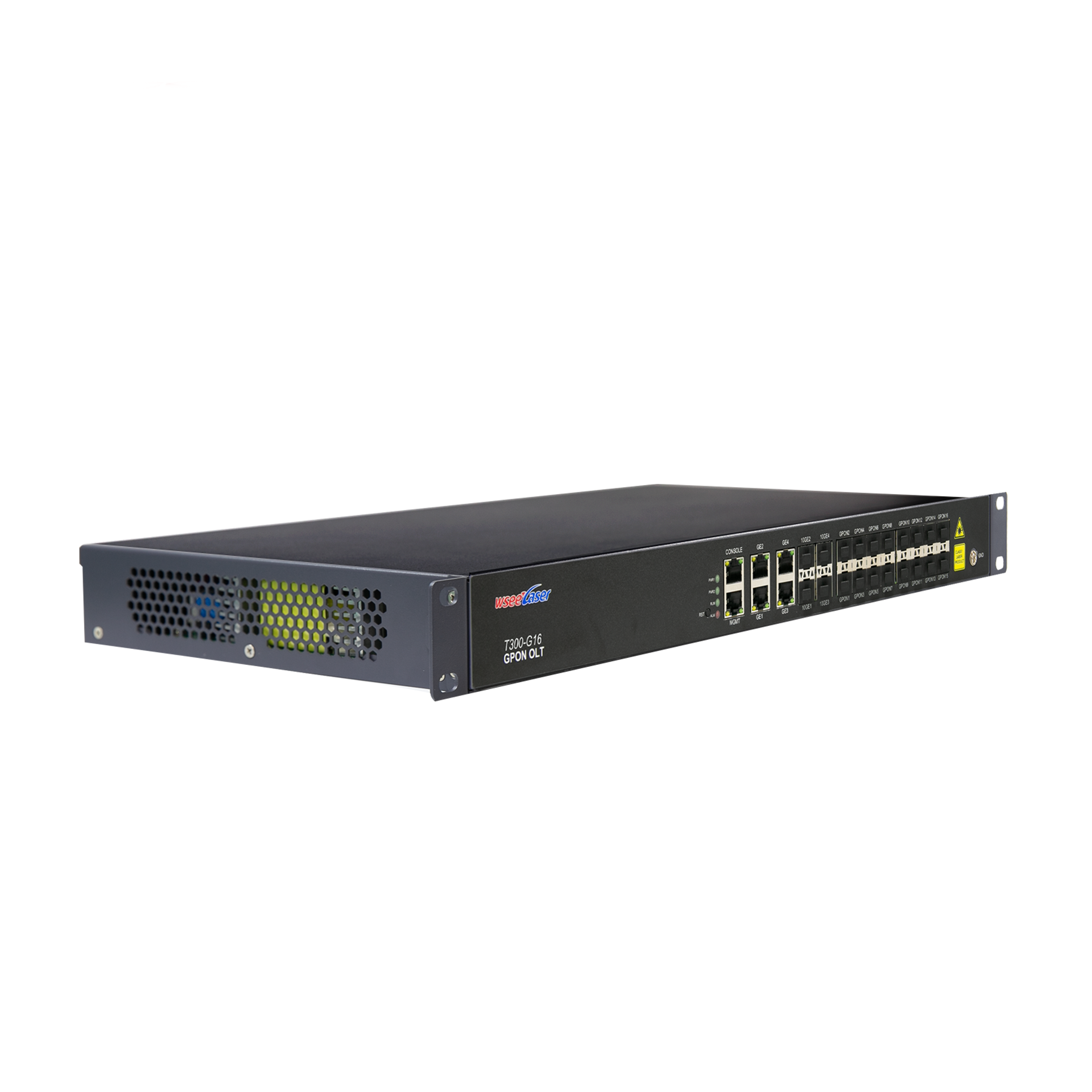
The Optical Line Terminal (OLT) is located inside the central office, and is the heart of the network. It is responsible for controlling traffic both upstream and downstream, assigning bandwidth, and verifying and authenticating subscribers. By enabling multiple ONUs to communicate across a single OLT port with one shared fiber line, point-to-point architecture’s cost on fiber deployment is greatly saved.
ODN: The Passive Transport Path
The Optical Distribution Network (ODN) is the passive network that connects the OLT to the subscriber(s). In well designed ODN, there are three segments of fiber:
Feeder fiber: From OLT to the distribution point
Distribution fiber: fiber from distribution points to access points
Drop fiber: Point of access to subscriber's property
Due to its passive design, consisting of optical splitters and fiber cables, the ODN is extremely reliable and maintenance free, which is an important feature in large scale deployments.
Optical Splitter: The Silent Workhorse
The first passive device used in PON is the optical splitter used to share one fiber between many subscribers. These are used in ratios such as 1:2, 1:4, 1:8, 1:16, 1:32 and 1:64 in GPON.
In FTTH network design, the two deployment strategies that can be considered are:
Centralized (single-stage) splitting: Consolidating all splitters in one location maximizes OLT utilization and provides single point for troubleshooting. It works best for the markets with the variable number of subscribers.
Distributed (cascaded) splitting: Less expensive to deploy fiber with splitter in two or more stages (such as 1:4 and then 1:8) and more flexible for sparse rural locations. This may result in reduced OLT port efficiency however.
ONU: The Subscriber Terminal
The Optical Network Unit (ONU) or Optical Network Terminal (ONT) is located at the customer premises where it decodes optical signals into electrical interfaces (Ethernet, Wi-Fi, telephone and CATV). The OLT ONU architecture is based on time-division multiplexing: There are time slots that are allocated to each ONU by the OLT so that they know when it's their turn to send data upstream to the OLT to avoid data collisions.
FTTH and CATV Integration
It is quite common for FTTH networks to provide CATV service together with data and voice, convergence often called "triple play." This can be accomplished by simply super-imposing 1550 nm CATV video signal onto the same fiber on top of the PON data wavelengths, namely 1490 nm for downstream, and 1310 nm for upstream.
FTTH optical receivers are offered by Shandong Wanshuo Optoelectronic Equipment Co., Ltd., covering wide range of applications for these converged networks. Advanced GaAs low noise amplification, AGC circuits for stable output over wide input power range and optional WDM integration for triple-play applications are built into our OR16B and OR18 series receivers. Our products are built with ultra-low power consumption and rugged design (-35℃ to +75℃ operating range) for dependable operation in variety of deployment situations.
Conclusion
The FTTH network architecture, including OLT, ODN, optical splitter and ONU, provides efficient and economically high-speed connections. Proper FTTH network design considering subscriber density, budget and scalability helps to achieve optimal performance. With precision manufacturing and comprehensive technical support and service, as professional manufacturer in the optical communication industry, Shandong Wanshuo Optoelectronic Equipment Co., Ltd. could give full one-stop solutions service, helping you to make stable and reliable deployments for FTTH.