 EN
EN
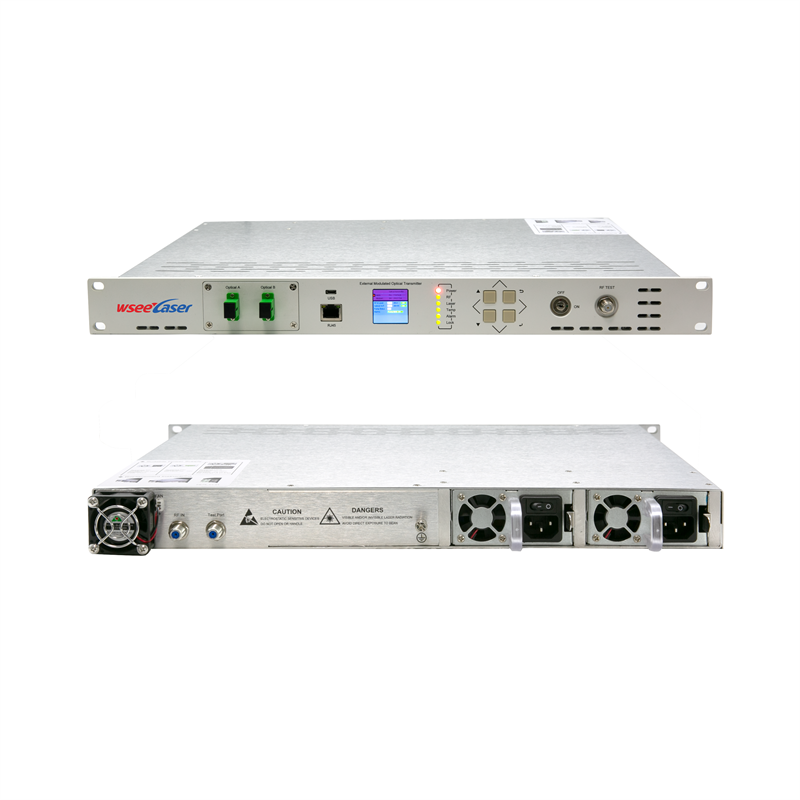
Selecting an appropriate CATV optical transmitter-which influences system performance, quality of service, and operational expenditures during its service life-is an important consideration during your network design project. Whether your network designs involve tweaking your headend to scale a current FTTH deployment, or constructing your new distribution network from scratch, there are a few key optical transmitter parameters such as power output, modulation, and operating wavelength to recognize when looking for that optimum transmitter model. To structure this purchasing decisions process; here we explore one logical approach to selecting your next CATV optical transmitter model.
Wavelength Selection: 1310nm vs. 1550nm
An important factor when comparing upfront is wavelength.1310-nm transmitter implementations typically target shorter links up to perhaps 20-30 km and often feature a lower cost because they use a standard and readily available optical fiber with relatively low intrinsic attenuation and thus offer efficient direct connection in an application where optical amplification may not be required.
However, 1550nm transmitters are suitable for long-haul applications up to distances exceeding 100 km due to lower transmission loss of the fiber (0.2 dB/km at 1550nm vs. 0.35 dB/km at 1310 nm) and the feasibility of utilizing EDFAs (erbium-doped fiber amplifiers) to increase transmit signal power in these fiber spans. Standard 1550nm fiber optic transmitters can readily be used as part of a high capacity network due to ability to also utilize DWDM for transmission and data purposes simultaneously, making them an ideal for long haul network builds where optical amplification will be necessary. Consider your network reach and whether it will eventually include optical amplification when comparing a fiber optic transmitter product.
Modulation Technology: Direct vs. External Modulation
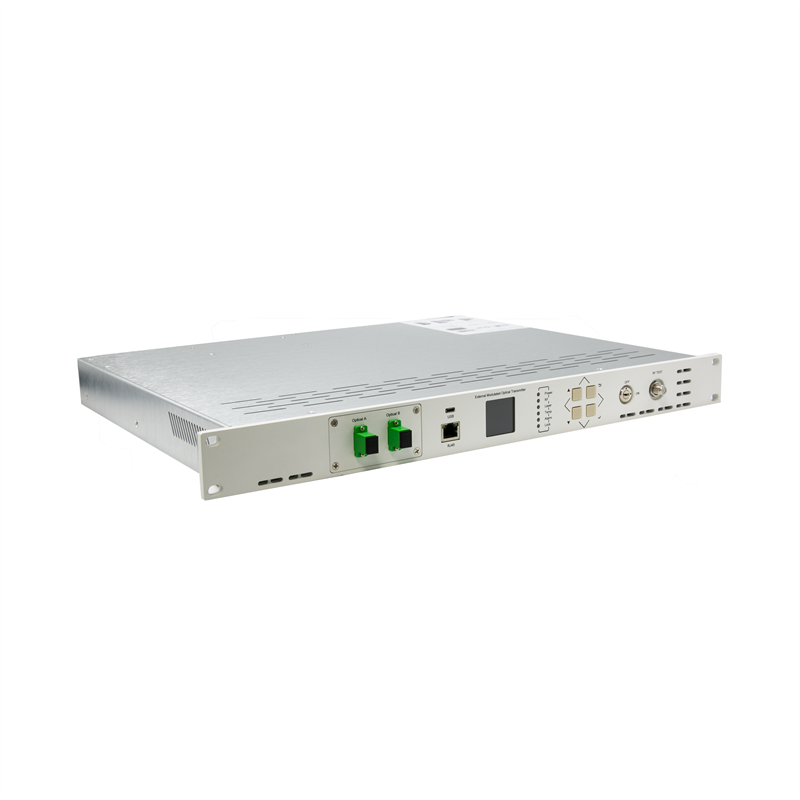
Modulation technology is another one of the crucial factors that will impact the performance in any CATV optical transmitter. Direct Modulation transmitters utilize the laser drive current to modulate the RF signal and can be a cost-effective solution for lower reach and not so critical applications, but they suffer from additional Chirp, creating limited linearity for increased CSO, CTB values over long fiber spans.
Premium External Modulation transmitters are the standard in the CATV industry and produce superior linearity and lower Chirp values by utilizing a continuous-wave fiber optic transmitter laser coupled to an external LiNbO₃ transmitter modulator. Typical specifications for these CATV optical transmitter products produce CNR ≥ 52 dB, CTB ≤ -65 dB, and CSO ≤ -65 dB thereby creating a quality video signal over the longer fiber span. New CATV optical transmitter models are coming to the market with adjustable SBS (Stimulated Brillouin Scattering) compensation capabilities ranging from 13 to 19 dBm to enable longer fiber optic transmitter launches. When considering the optical transmitter product for your application, it's wise to ensure you are considering sufficient launch power based on your entire link budget by checking the fiber optic transmitter specs for maximum possible fiber span. Modern CATV fiber optic transmitters contain automatic power control to keep laser launch power at a constant level regardless of fluctuations in temperature and the aging process of the laser.
Optical Output Power and Link Budget
The transmit power is another important specification of the CATV optical transmitter. Optical transmit power is measured in dBm and it determines the maximum link loss your transmitter can endure. A higher launch power in your CATV optical transmitter will be able to drive additional split ratios in a PON network allowing for more end subscribers to be deployed for FTTH and RFoG solutions.
Optical transmitter products are available in a variety of launch powers ranging from +4 to +10 dBm to allow for higher split ratios but can be expanded through super trunking if it's necessary to provide for very large split ratios. When selecting the optical transmitter, all link losses such as total fiber span loss, splitter losses and connector/splice losses must be accounted for in the link budget to ensure that there is adequate receive power at the optical receiver.
Additional Features to Consider
Here’s an overview of other important (though somewhat secondary) practical features to look for when buying a CATV optical transmitter:
AGC (Automatic Gain Control): Compensates for fluctuations in the RF input signal from upstream to provide a stable signal to transmitter optics.
SNMP Network Management: The network management capability helps the CATV operator monitor and configure parameters of transmitters remotely from headend, thereby minimizing management efforts.
WDM Integration: The 1310nm channel is often integrated into the head end transmitter with optical WDM to carry 1550nm transmission light alongside this channel in the FTTX architecture to reduce of fiber costs.
Redundant Power Supplies: for applications such as head-ends, a backup power module must exist to complement the primary. This is also beneficial for online upgrade of the power supply unit by means of a "hot swap" function (that the faulty module replaced without turning off the equipment).
Manufacturing Quality and Reliability
When purchasing any optical transmitter, manufacturing accuracy plays a very large role in ensuring the stability of fiber optic transmitter performance. Shandong Wanshuo Optoelectronic Equipment Co., Ltd. uses industry leading SMT production lines that utilize 3D SPI+3D AOI full-process testing yielding a 99.8% direct connection rate. Devices are individually tested during assembly on the automated transmission system to ensure that all products meet strict CATV optical transmitter quality standards to ensure carrier-grade reliability.
Conclusion
The selection of an appropriate CATV optical transmitter depends on the requirements of the network it will be used in. Whether utilizing low cost 1310nm transmitters for lower split ratio metropolitan based networks or a 1550nm transmitter with EDFA support over longer distances, it is important to consider all of the critical fiber optic transmitter parameters when deciding. Shandong Wanshuo Optoelectronic Equipment Co., Ltd. showcases a comprehensive range of modern CATV transmitter technologies, offering solutions that cover all network architectures.