 EN
EN
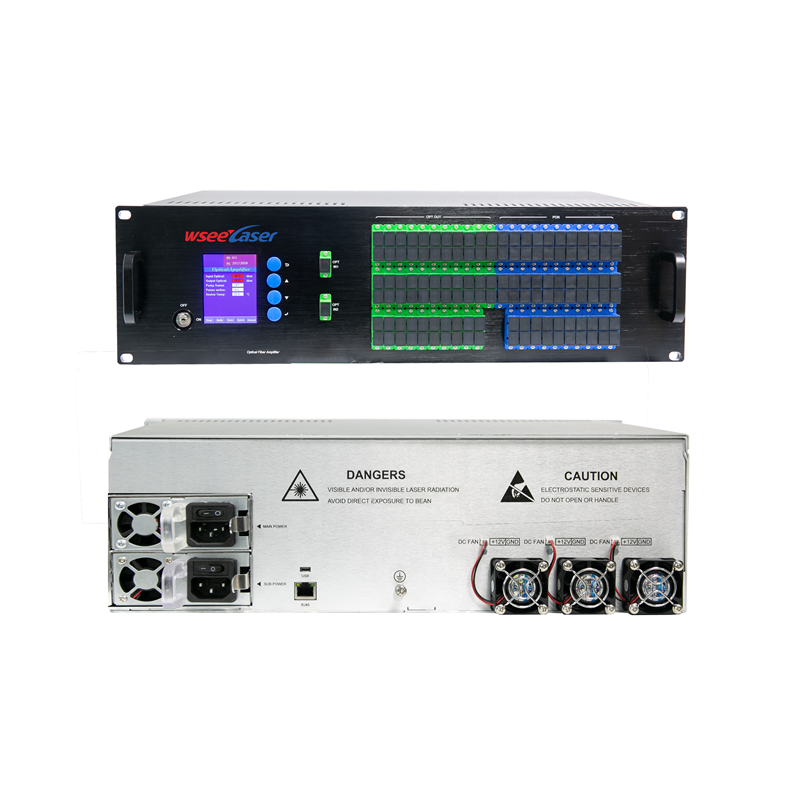
Choosing the right optical amplification solution is an important decision for any network operator deploying CATV broadcast service or for anyone expanding the reach of their FTTH network. With increasing demands for high-speed data and video delivery, learning to make a good selection of EDFA amplifier has quickly become necessary for network performance and long-term viability. This guide covers how to select the appropriate optical amplifier.
Understanding EDFA Technology for CATV and FTTH
The Erbium-doped Fiber Amplifier (EDFA) is the core of modern communication networks. EDFA amplification is performed directly in the optical domain by amplifying light signals around the 1550 nm wavelengths without electronic conversion. For CATV EDFA systems, they are primarily optimized to broadcast analog or digitally encoded video signals without significant distortion across long distances. In FTTH networks, EDFAs are used to transmit broadcast television signals simultaneously over the FTTH infrastructure, or combined with WDM to overlay CATV onto GPON or XGS-PON signals.
EDFA vs. EYDFA: Making the Right Choice for Your Network
The first question, and perhaps the most critical, for selecting a device from optical amplifiers is whether a standard EDFA or the EYDFA (Erbium-Yttrium Fiber Amp) is the best fit. In essence, how far do you want your optical signals to go?
The EDFA is best suited for medium distance FTH builds, head-end distribution of video, and smaller applications in the field (a typical port output range is 13 to 23 dBm). Standard EDFAs come with a good noise figure (typically between 4.0 and 4.5 dB) to maintain broadcast clarity (measured in CNR -Carrier to Noise Ratio). If keeping carrier to noise ratio is your goal, standard EDFAs generally provide lower noise Figures.
EYDFA are created to handle more power. The double-clad fiber technology in EYDFA provides up to 27 to 33 dBm or more of power output. It is the go to for high split ratio (i.e., 1:128 to 1:256 FTTH architectures) , to extend reach networks(20-40km feeder lengths),or to consolidate head-end coverage of a large number of hubs. The average EYDFA’s noise figure is slightly higher than that of an average EDFA (typically between 4.5 to 5.5 dB), which may be worth compromising for additional power output.
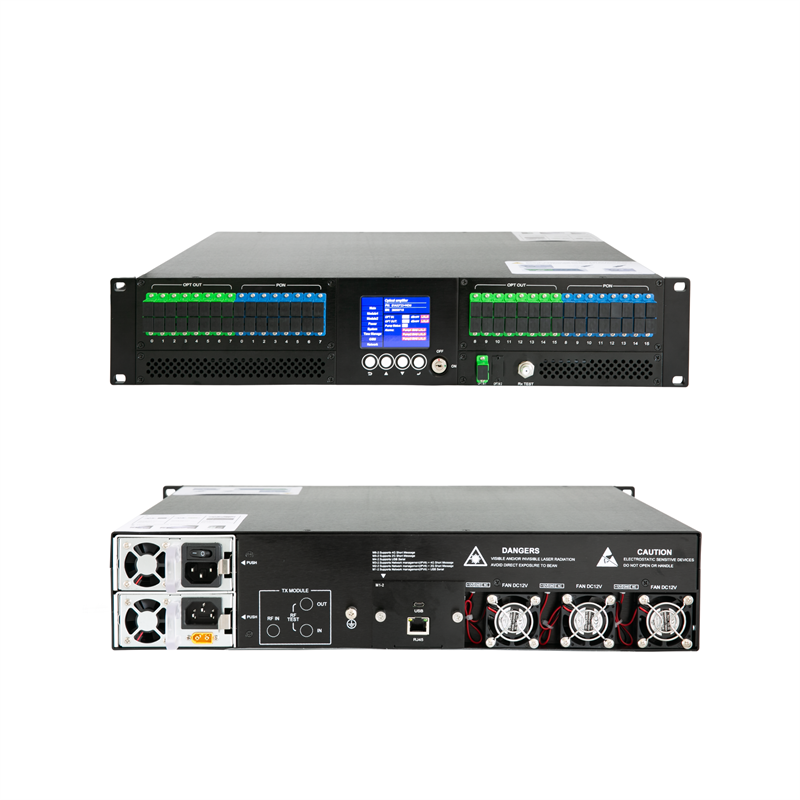
Key Technical Specifications to Evaluate
Noise Figure
While the EYDFA offer significantly higher power output, the noise figure is more important for CATV EDFA systems because it direct impacts CNR. An EYDFA with lower and better (less) noise figure is preferable in FTTH, although higher total power has significant benefits in high split ratio or long feeder length FTTH networks; however, every 1dB increase in noise figure reduces your available receiver margin of the system in 1 dB, since the noise figure usually is quoted at 0 dBm input signal, and the lower the better. An acceptable NF for an EDFA Catv application typically ranges from 4.0 to 4.5 dB.
Output Power and Port Count
Your available transmit power budget is determined by losses from your fiber, and number and division ratio of any splices or splitters that the optical signal will pass through before it arrives at its destination. You may require substantial output optical power to drive multiple downstream devices, like the numerous splitters for your FTTH system that may reach more than 1000 end-user homes. In general, more ports require higher output power. Typical ports range from 8 to 32 or more.
Gain Flatness and Reliability
The EDFA or EYDFA amplifier outputs gains within a given range (wavelength range) – ensuring stable performance and clear signal reception throughout the entire system. For example, Polytron’s AT-5000 is an EDFA amplifier optimized for transmission over fiber optic network for high quality video signals. Additional essential components for a network operator should include hot-swap redundant power supplies, SNMP (Simple Network management protocol) is an industry-standard internet protocol used for the management and monitoring of network devices. The use of SNMP can streamline troubleshooting efforts, as the technician will be able to remotely access pertinent system metrics and monitor a device for potential problems while in the field.
Application-Specific Considerations
CATV and HFC Networks: These systems are generally characterized by the requirement for a low noise figure and high linearity in transmission. This is precisely why EDFAs are preferred over many types of high power amplifiers.
FTTH and PON Networks: As you transition away from HFC infrastructure to fiber-based FTTH systems, you will likely need to employ optical amplifiers on your FTTX networks to serve more users and to enable fiber reach to their homes. For these FTTH/PON applications EDFAs have to use WDM module for adding broadcast signal to existing telecommunications signal or carry additional signals.
Why Choose Shandong Wanshuo Optoelectronic Equipment Co., Ltd.
Shandong Wanshuo Optoelectronic Equipment Co., Ltd is proud to be a professional EDFA & EYDFA manufacturer in China’s optical communication industry. Our independent R&D, intelligent manufacturing, strong quality assurance system for producing first class EDFA & EYDFA, which consist of low noise figure (~4.5dB), high power output (up to 26dBm or more) and flexible packaging. We provide end-to-end, one-stop solution for our clients.