 EN
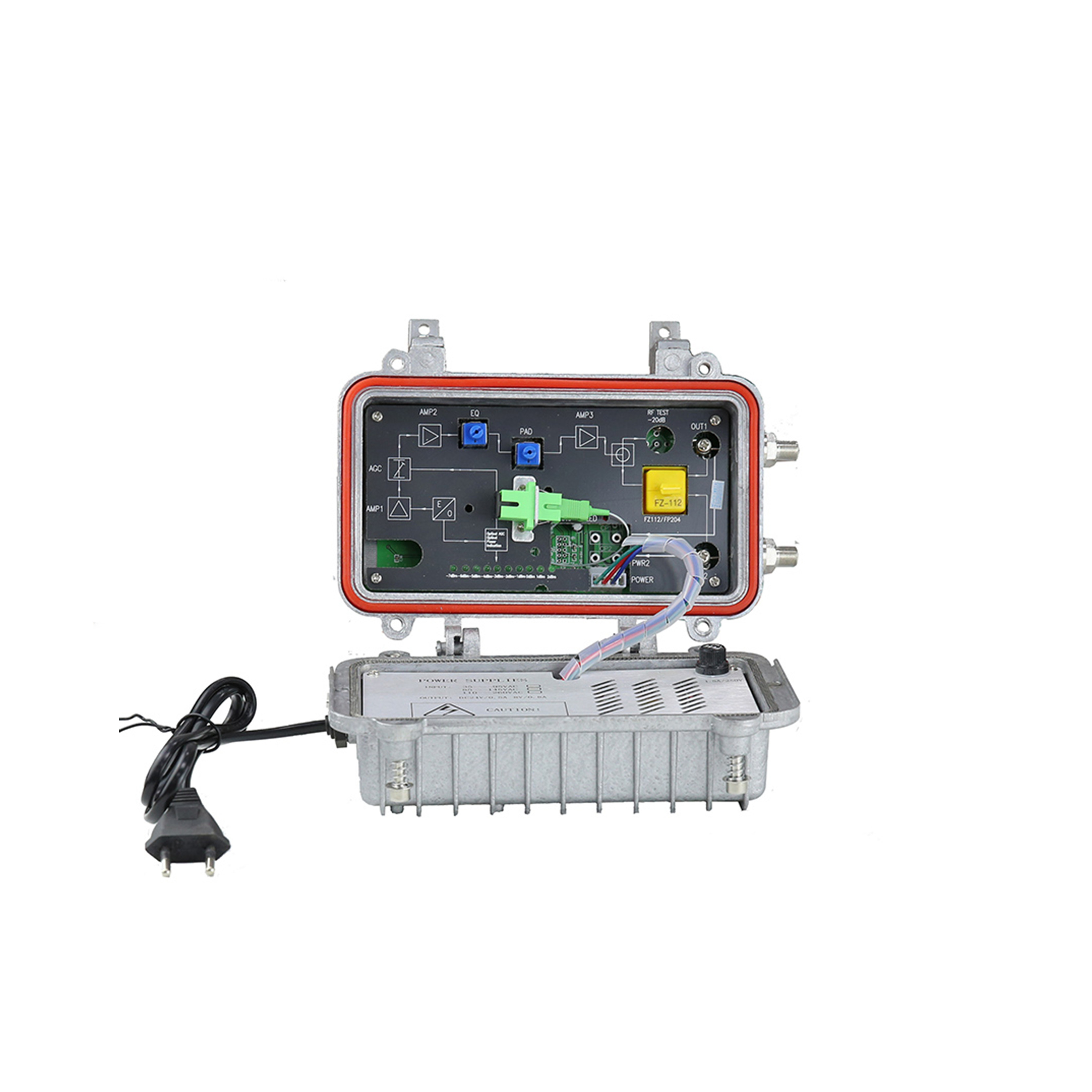
GPON ONT and GPON ONU classification discussion have caused some arguments among optical broadband professionals. Network architects, procurement and deployment engineers need the distinction very badly in equipment acquisition for networks. The term 'ONT' and 'ONU' often have been confused among the profession, yet there's differences between their definitions, functions, applications which may affect designing and procuring. In this article, we investigate the ONT versus ONU argument, explaining what the GPON terminal does, and why current manufacturing technology (with GPON terminal's manufacture by Shandong Wanshuo Optoelectronic Equipment Co. Ltd. For example) ensures the manufacture quality of GPON terminals.
Terminology: Where Do ONT and ONU Come From?
The distinction between GPON ONT and GPON ONU stems from different standardization bodies and historical deployment scenarios. An ONT (Optical Network Terminal) is a device usually used for a single subscriber in a Fiber-to-the-Home (FTTH) application, according to ITU-T standards. An ONU (Optical Network Unit) on the other hand is usually used in FTTB (Fiber-to-the-Building) or FTTC (Fiber-to-the-Curb) systems and is a piece of equipment that supports multiple users.
But in current use the difference is becoming more obscure. In the meantime, most vendors and operators interchange the terms and a GPON ONU is broadly perceived as the same endpoint device as a GPON ONT. They act as the customer-premises equipment at the end of the optical signal from the OLT (Optical Line Terminal) and as the converter to electrical interfaces for end-user devices. It can be called GPON ONU (Optical Network Unit) or GPON ONT (Optical Network Terminal), it is the last GPON terminal in the access network.
Functions: What Do These Devices Actually Do?
Functionally, there is almost no difference between GPON ONU and GPON ONT. Both devices have same basic functions:
Optical-to-Electrical Conversion: Downstream (from the OLT) optical signals are converted to Ethernet, voice or RF signals for user equipment and upstream (from the user) data is sent to the network.
Service Integration: Triple play, high-speed Internet, VoIP telephony and video (IPTV or CATV) via multiple interfaces including Gigabit Ethernet ports, POTS ports and RF coaxial outputs.
OAM (Operations, Administration, and Maintenance): Maintaining the GPON terminal fleet efficiently by supporting remote management, performance monitoring and fault diagnosis as specified in the ITU-T G.988 standard.
A GPON ONU with integrated Wi-Fi (Wi-Fi 5 or Wi-Fi 6) enables both wired and wireless connectivity for residential or SOHO (Small Office/Home Office) environments. Legacy cable television signals are also transmitted through CATV interfaces on the same fiber network, eliminating the need for separate coaxial networks.
Deployment: FTTH, FTTB, and Beyond
The traditional ONT vs. ONU separation is still relevant in the deployment context. For pure FTTH rollout, every house is guaranteed a dedicated GPON ONT, with dedicated bandwidth and quality of service. This is the most typical deployment model in urban residential areas.
For FTTB scenarios, one GPON ONU can be deployed in a building's telecommunications room or basement and connected to other apartments or offices by Ethernet distribution. This helps to lower the number of optical network units needed and it may decrease the capital expense of the service provider.
Today's GPON equipment is becoming more and more versatile. A number of models of the GPON ONU are now available to allow for a switching between the GPON and EPON standard, which renders the ONU suitable for hybrid networks. Further, the proliferation of multi-dwelling units (MDUs) and enterprise campuses has contributed to the demand for GPON terminals with multiple user ports, higher capacity, and enhanced security features.
Manufacturing Excellence: The Backbone of Reliable GPON Terminals
The manufacturing process is a critical issue in quality and performance of a GPON ONU or GPON ONT. Shandong Wanshuo Optoelectronic Equipment Co., Ltd., a professional manufacturer that integrates R&D, production, and sales, is a representative of superior production strength. It has factory-type structures that have 12 high-grade purification/dust-free workshops to meet the strict environmental conditions needed to manufacture optoelectronic devices.
The main strengths of the manufacturing sector are:
SMT Production Line: 3D SPI, 3D AOI full process inspection and industry-leading high-speed chip mounters, and 12-zone nitrogen reflow soldering systems. The direct connection rate is 99.8%, and it can be used around the clock for stable high precision PCB assembly.
Wave Soldering Line: High-tech lead-free technology and intelligent testing technology of AOI to remove solder joint defects and guarantee soldering reliability.
Assembly Line: Standardized and automated complete-machine assembly solution, which combines mass production with customization.
Device Production Line: Independently developed smart test equipment, full process automatic detection, and data traceability guarantee product quality.
The capabilities allow Shandong Wanshuo to manufacture a full range of PON products such as CATV ONUs, 1GE ONUs, Wi-Fi 4/5/6 ONUs, and GPON OLTs. Whether you are procuring GPON ONU for residential FTTH project or high-density GPON terminal for MDU deployment, robust manufacturing ensures reliability, performance, and longevity of equipment.
Conclusion: Choosing the Right GPON Terminal
To sum up, the terminologies ONT vs ONU have their historical meaning, but in a practical sense are pretty much the same GPON terminal. As for GPON ONT versus GPON ONU, it isn't really technical, but more a function of deployment size and vendor opinion.
When choosing GPON equipment, look for manufacturers with a strong track record in manufacturing, quality control, and product breadth. Shandong Wanshuo Optoelectronic Equipment Co., Ltd. is a trusted provider of optical communication solutions for FTTH, FTTB and other applications, boasting cutting-edge facilities, professional technical team and strong independent R&D and intelligent manufacturing capabilities.