 EN
EN
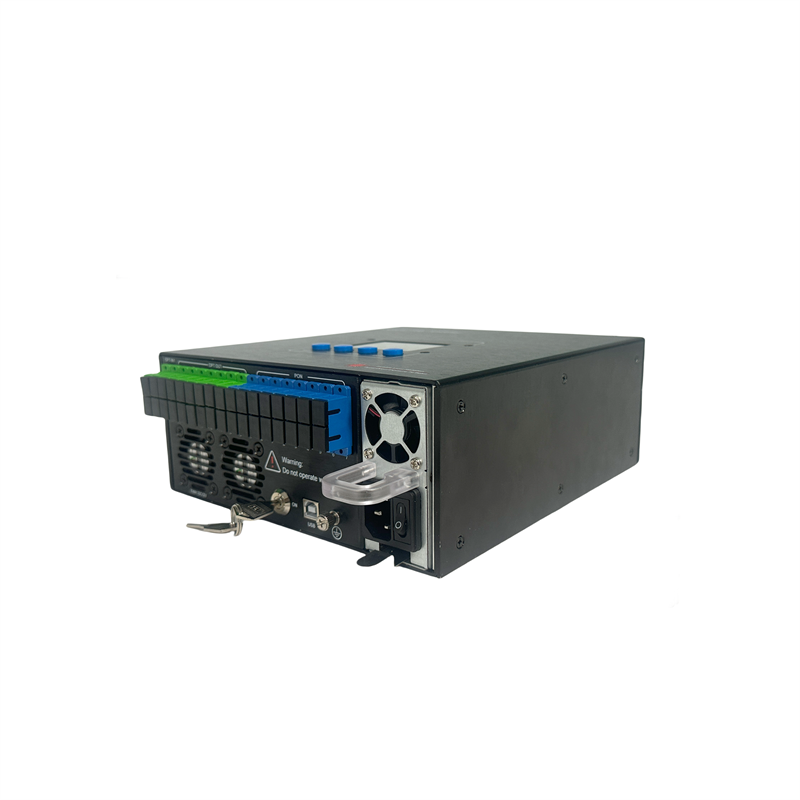
Choosing the right optical amplifier is among the most crucial decisions that go into the designing of fiber optic networks. Since there are different technologies available for different applications, network engineers must be aware of the advantages and drawbacks relating to cost, performance, and deployment situations. This comprehensive guide compares four main types of optical amplifiers—EDFA, EYDFA, SOA, and Raman to help you make the right choice for your CATV, FTTH, or long-haul network.
EDFA: The Industry Workhorse
The Erbium-Doped Fiber Amplifier (EDFA) is the single most deployed optical amplifier in telecommunications today. The 1550nm C-band device comes with a high optical gain (as high as 40 dB), a low noise figure, (typically 4.0 to 4.5 dB), and a polarization-independent performance. EDFAs are the first choice for metro networks, CATV distribution, and FTTH applications that require a high degree of reliability and cost-effectiveness.
For most standard, cost-effective applications using a 1:64 splitter that requires feeders no longer than 15km—an EDFA is your go-to choice. Many companies, like Shandong Wanshuo Optoelectronic Equipment Co., Ltd., are experts in manufacturing this reliable, efficient device with 12 high-grade dust-free workshops and automated production lines to keep the quality consistent.
EYDFA: High-Power Alternative for Extended Reach
The Erbium-Ytterbium co-Doped Fiber Amplifier (EYDFA) allows the network designer to pump further into the network for applications that can utilize a bit more optical budget. By adding ytterbium ions, and using double-cladding pump structure the EYDFA achieves output power of as high as 33dBm—higher than the standard EDFA, and is commonly used in long-reach FTTH (feeder distances above 25km) and 1:128 split ratios and RFoG deployments where high optical power is essential.
There is a slight penalty to pay for higher power output in the form of noise figure; the EYDFA has a noise figure which typically runs around 4.5 to 5.5 dB, and uses more power than the standard EDFA. For many, this increase in cost is amortized by eliminating numerous, and often expensive, mid-span active components to achieve the same distribution network. The question for any network operator is if the longer optical budget is worth the increase in cost per module, and in some rural or suburban builds, this is definitively true, and an EYDFA at the headend will have lower per-unit operating costs.
SOA: Semiconductor Speed and Integration
The Semiconductor Optical Amplifier (SOA) has unique qualities that distinguish it from the EDFA and EYDFA, including extremely fast switching speeds in the nanoseconds range. These characteristics make the device appropriate for burst mode, wavelength conversion and integration into optical circuits, however for high power distribution, it often falls short compared to EDFA vs SOA; SOAs often have noise figures above 6 to 8 dB as well as a polarized gain. This is why the use of SOAs in CATV and FTTH networks is almost unheard of and their specialty lies in metro ring networks and the add/drop capabilities inherent in optical switching and research endeavors. If you are a normal PON network operator, the EDFA will still be the better choice for you, no question.
Raman Amplifier: Distributed Amplification for Ultra-Long Haul
It works differently from traditional discrete amps (EDFAs, EYDFAs and SOAs) and distributes its amplification across many kilometers rather than in one spot in the network. The noise figure can be a near zero dB, and Raman amps have almost infinite amplification bandwidths due to their use of multiple pump wavelengths. Forsubmarine systems and long distance trunk lines, there isn't much that can beat the Raman Amplifier.
The huge negative aspect is its complexity and price. Raman amplifier requires powerful and multiple pump lasers and careful management of optics; they are overkill for CATV networks—especially considering the feeder distances will usually never above 40km. The most viable options here are EDFA and EYDFA.
Making the Right Choice for Your Network
Knowing the different capabilities of each of the optical amplifier type devices discussed here will allow you to choose the one best suited for your application. For virtually all CATV distribution applications as well as FTTH access applications, the EDFA offers the best compromise between reliability, noise level, and cost. If you expect longer feeder lengths or require 1:128 split ratios, an EYDFA can effectively serve your purposes. For almost all access networks, an SOA or a Raman amplifier simply will not fulfill what's needed for CATV and FTTH.
Shandong Wanshuo Optoelectronic Equipment Co., Ltd., with its integrated production lines ranging from SMT to final assembly, is able to provide robust optical amplifiers for many different networking needs. Whether you need a standard EDFA for a 1:32 FTTH application or a Raman amplifier for a rural submarine line—selecting the appropriate amplifier type, and a qualified manufacturer is essential to ensure the longevity and reliability of the network.