 EN
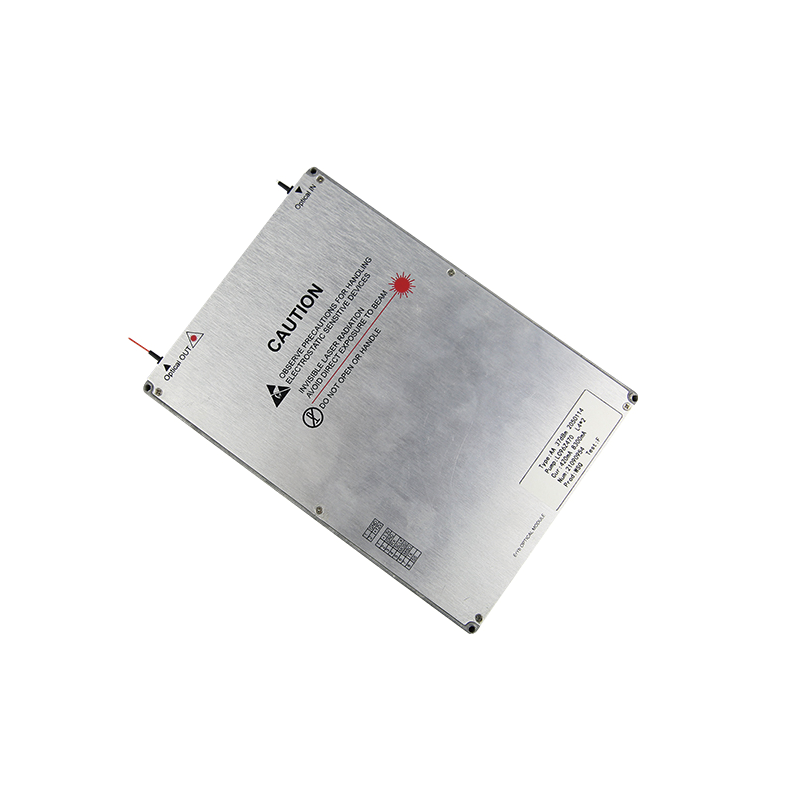
The choice of amplification technology in an optical communication system is an important factor that affects the transmission performance, capacity and operation cost of the optical communication network. Shandong Wanshuo Optoelectronic Equipment Co., Ltd. Is a professional company integrating R&D, production and sales of optical communication equipment. It is committed to providing customers with a complete set of optical communication solutions, which are widely used in various fields such as communication network and optical fiber amplifier. This paper compares the two major technologies – erbium-doped fiber amplifiers and Raman amplifiers, in terms of performance, cost and use cases.
How EDFA and Raman Amplification Differ in Principle
An EDFA is a discrete optical amplifier based on a special erbium doped fiber (gain medium) and pumped by 980 nm or 1480 nm lasers. It offers high gain at low noise, and is the most common choice for C-band (1530–1565 nm) long-haul links. By contrast, Raman amplification is a distributed technique, in which stimulated Raman scattering is made to occur in the fiber transmitting the light. Energy is transferred to the signal by a high power pump laser (about 1450 nm for C-band signals) through the fiber’s nonlinear effect. The optical signal to noise ratio (OSNR) is enhanced by the transmission fiber, not just at an amplification point.
Performance Comparison: Noise, Bandwidth, and Reach
The biggest difference in performance is noise figure and improvement in OSNR. In EDFA-only systems, noise figures in the L-band are worse than in the C-band, causing spectral non-uniformity in C+L systems. Distributed Raman amplification can overcome this limitation by offering good noise figures below zero beyond 1600 nm with the help of EDFA. The simulation results for 100 km span indicate that the generalized OSNR is enhanced by 2.5 dB and 2.0 dB for hybrid Raman-EDFA amplification in the C-band and L-band, respectively, giving a reach extension of about 58%. The spectral gain ripple, however, caused by Raman amplification has to be compensated by gain flattening filters, making the design more complex. For typical C-band applications, an EDFA still has the advantages of high raw gain efficiency and power efficiency.
Cost Considerations and Integration Complexity
The mature manufacturing ecosystems and relatively simple integration of EDFA systems offer advantages. The doped fiber, pump lasers and control electronics are all manufactured at scale, including by Shandong Wanshuo, and are all needed in a standard EDFA module. High-power (500 mW to 2 W for distributed systems) and stable pump lasers are required for Raman amplifiers, and exact temperature control is required, which adds to the cost of the components. Backward pumping configurations and safety protection circuits drive up the complexity of the system. The economic equation for network operators is straightforward: an EDFA is useful for conventional C-band links, while Raman is cost-effective in ultra-long reach or uniformity in the L-band.
Use Cases: When to Choose Each Technology
For most long-haul and metro networks, where there is adequate C-band capacity and moderate repeater spacing, an EDFA is the default. It has a high gain and low noise characteristic, suitable for standard WDM systems. While every decibel of OSNR is critical in ultra-long-haul terrestrial and submarine links, Raman amplification shines. In C+L-band systems, hybrid Raman-EDFA configurations simplify EDFA design by actually reducing launch power requirements and relaxing gain and tilt specifications. Discrete Raman amplifiers are also useful for special applications where the amplification of a light beam can be required outside the C-band, for example, in S-band or O-band sensing systems, which cannot be achieved with EDFA.
Conclusion
The roles of both EDFA and Raman amplification are different in today's optical networks. When combined with EDFA, Raman amplification extends reach and improves spectral uniformity in long-haul applications, while EDFA remains proven and cost-effective for most conventional long-haul links. Shandong Wanshuo Optoelectronic Equipment Co., Ltd. is a company that is deeply involved in the optical communication industry, and has a complete and self-controlled production line of optical transmitters, fiber amplifiers, optical receivers and CATV/PON equipment. The company pursues independent R&D and intelligent manufacturing, ensuring that customer requirements are met with stable, reliable products and comprehensive technical services, both for standard EDFA solutions and for custom amplification architecture for complex network applications.